Competitor intelligence for YouTube creators,built on the YouTube API
Madelyn wanted to give creators real data on their channels and their competitors: subscribers, impressions, click-through rates, thumbnails and trends over time. A full team designed and built the platform in about two and a half months, then took it as far as the YouTube API allows.
Project in facts
- IndustryCreator Analytics
- ClientMadelyn, United States
- TimelineAbout 2.5 months
- Team6 people (CTO, UI/UX designer, backend developer, 2 frontend developers, QA)
- What we didUX/UI Design, Web Development, API Integration
- StackNext.js, Node.js, TypeScript, PostgreSQL, YouTube API, Google API, Railway, HTML & CSS, Figma
01. Where they started
Madelyn, based in the United States, saw how much creators guess. When to post, which thumbnail works, why one video takes off and another does not. Most of them have no easy way to see what their competitors are doing, or to spot their own trends early.
The idea was DigiMarket: a web app where a YouTuber, or anyone working with YouTube, can compare channels side by side, see their own data in one place and get warned when something changes.
02. The hard part
Everything DigiMarket shows comes from YouTube and Google. The product lives inside the limits of those APIs: what data they expose, how often you can ask for it and how far back it goes.
Comparing channels also means tracking things YouTube does not announce, like a competitor quietly swapping a thumbnail, and turning raw numbers into alerts a creator can act on.
03. What we built
Channel and competitor comparison
Pick your channel and a competitor, then compare subscribers, total views, video count, average watch time and click-through rate on the same charts.
Video-level analytics
For every video: views over time, likes and dislikes, impressions, watch time and how each one performed against the channel average.
Thumbnail change tracking
DigiMarket watches for thumbnail changes on tracked channels, so creators can see what competitors test and what happens to views afterwards.
Alerts when a threshold is crossed
Creators set thresholds on the numbers that matter to them and get notified when something drops, spikes or stops working.
History from day one
Every tracked channel builds its own history from the moment it is added, stored in PostgreSQL so trends become visible over time.
A full product team
Designed in Figma and built with Next.js, Node.js and TypeScript, connected to the YouTube and Google APIs and hosted on Railway, by a team of six.
04. What happened
DigiMarket was designed and built in about two and a half months and handed over close to launch, with channel comparison, video analytics, thumbnail tracking and alerts in place.
Building it also surfaced a platform limit worth knowing about: YouTube does not share historical channel data, so any tool built on its API starts tracking from the day a channel is added, while long-running competitors hold years of stored history. We explored two technical approaches, gave Madelyn a clear picture of what that meant for the product, and Madelyn made the call on next steps with all the facts. The code and designs are Madelyn’s.
05. What this means for you
If your product depends on someone else’s platform, their API sets the rules. Before you spend your budget, find out exactly what data you can get, how often, and how far back. That is exactly what discovery is for: knowing before the build what your product can and cannot offer.
And when a limitation turns up mid-project, you should hear about it straight away, with options, so you can make the call with all the facts.
Have an idea you want to build?
Book a free discovery call. We'll tell you honestly what it would take, what it costs, and whether it's the right time to build. No pressure.
Book a Free Discovery CallMore case studies
From an idea in Knoxville to a live community app with 130+ businesses
Two co-founders with no technical background wanted one place where Knoxville could find local events, restaurants and services. We took it from a conversation to the App Store and Play Store, with a verified business directory behind it.
Read the full story
A budgeting app with identity verification built in from day one
Nico had a clear idea: help people organise their money and actually understand it. He did not have a developer. We ran discovery, designed the product and shipped a React Native app to both stores, with identity verification and bank account connection built in from day one.
Read the full story
Rebuilding a veterinary telehealth platform that now serves 100,000+ pet owners
PawSquad already had customers and revenue. What it did not have was a platform that could keep up. We rebuilt the mobile app, the web app and the backend around the business that was already working, and stayed on as the team that keeps it growing.
Read the full story
A property management platform that remembers every meeting
Martina knew exactly where her client’s process was breaking: promises made in long resident meetings kept getting lost. In about a month we turned that into user flows, 140+ designed screens, a clickable prototype and a database schema already written in code.
Read the full story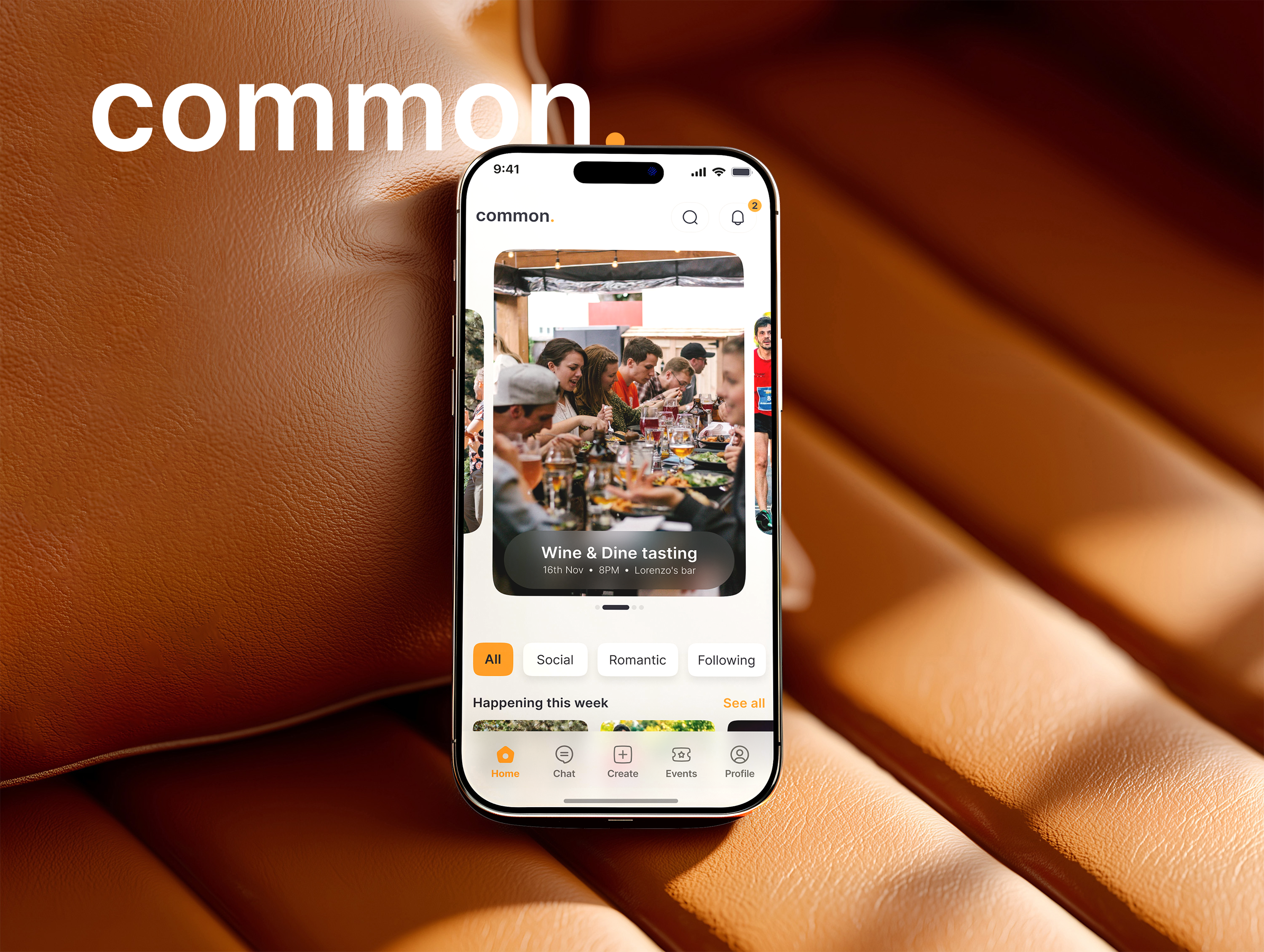
An app for meeting real people, redesigned around trust
Common makes meeting people simple: anyone can host or join real, local events in seconds. We redesigned the app so it felt simple, safe and easy for strangers to meet.
Read the full story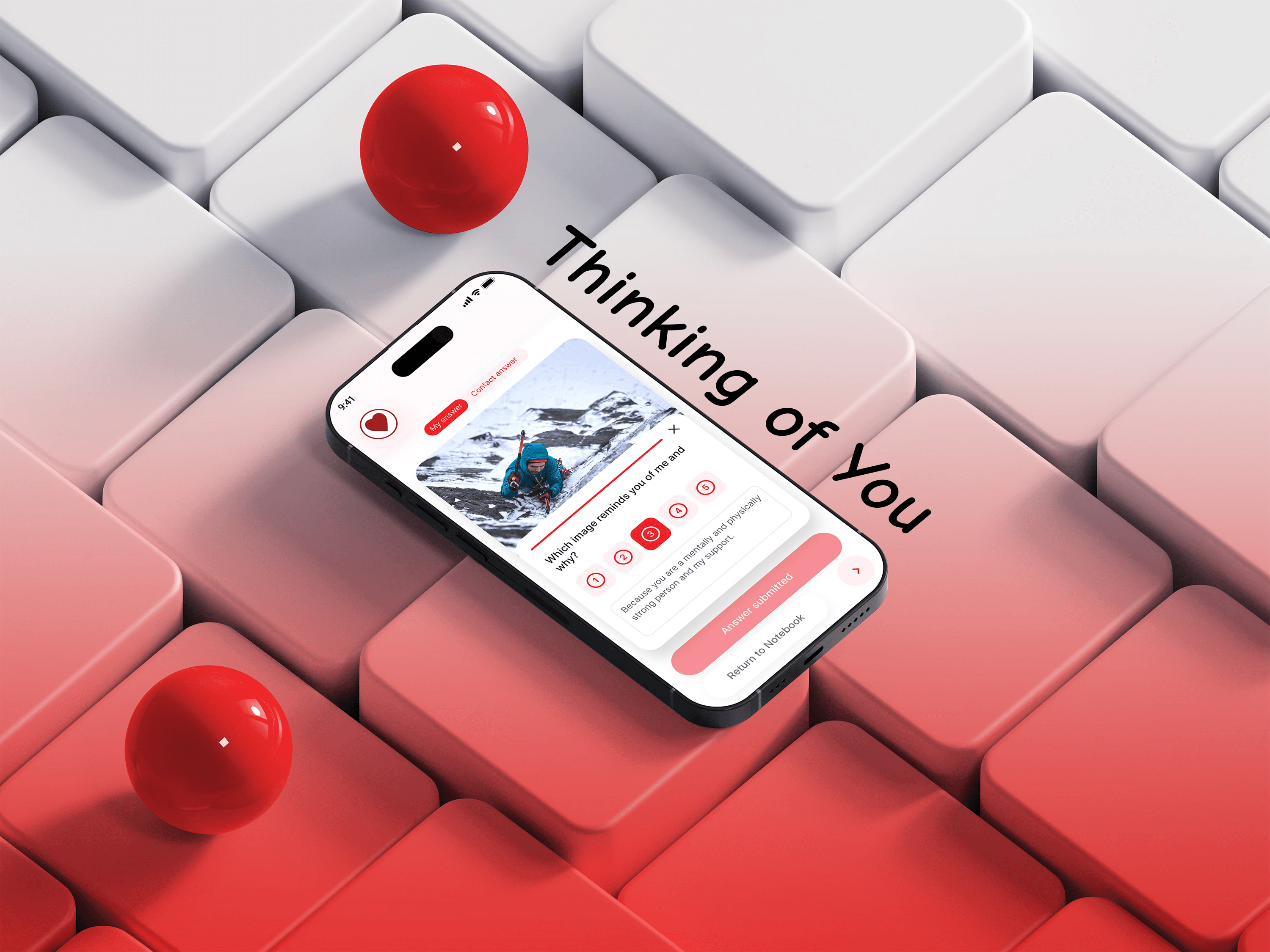
An app for couples that keeps the spark alive
Christopher wanted to help partners stay close when work and life get in the way. We built a minimalist app where one tap tells your partner you are thinking of them, and daily questions bring you back to each other.
Read the full story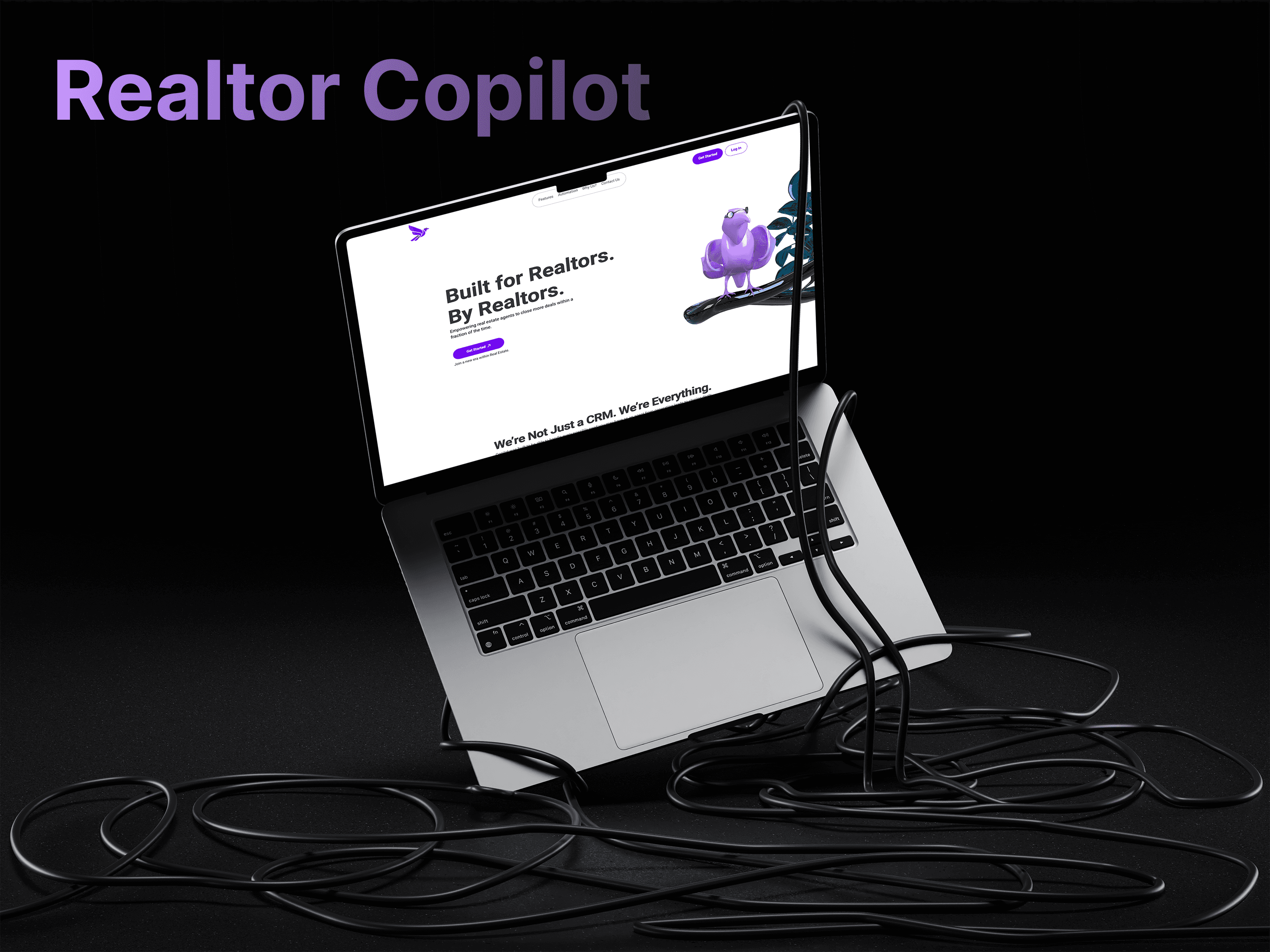
A launch website for an AI product, with a logo that flies
Realtor Copilot needed a website to introduce its AI to real estate agents. We defined the brand around their logo, turned the bird in it into an interactive 3D animation, and built a minimal, highly interactive site in Webflow.
Read the full story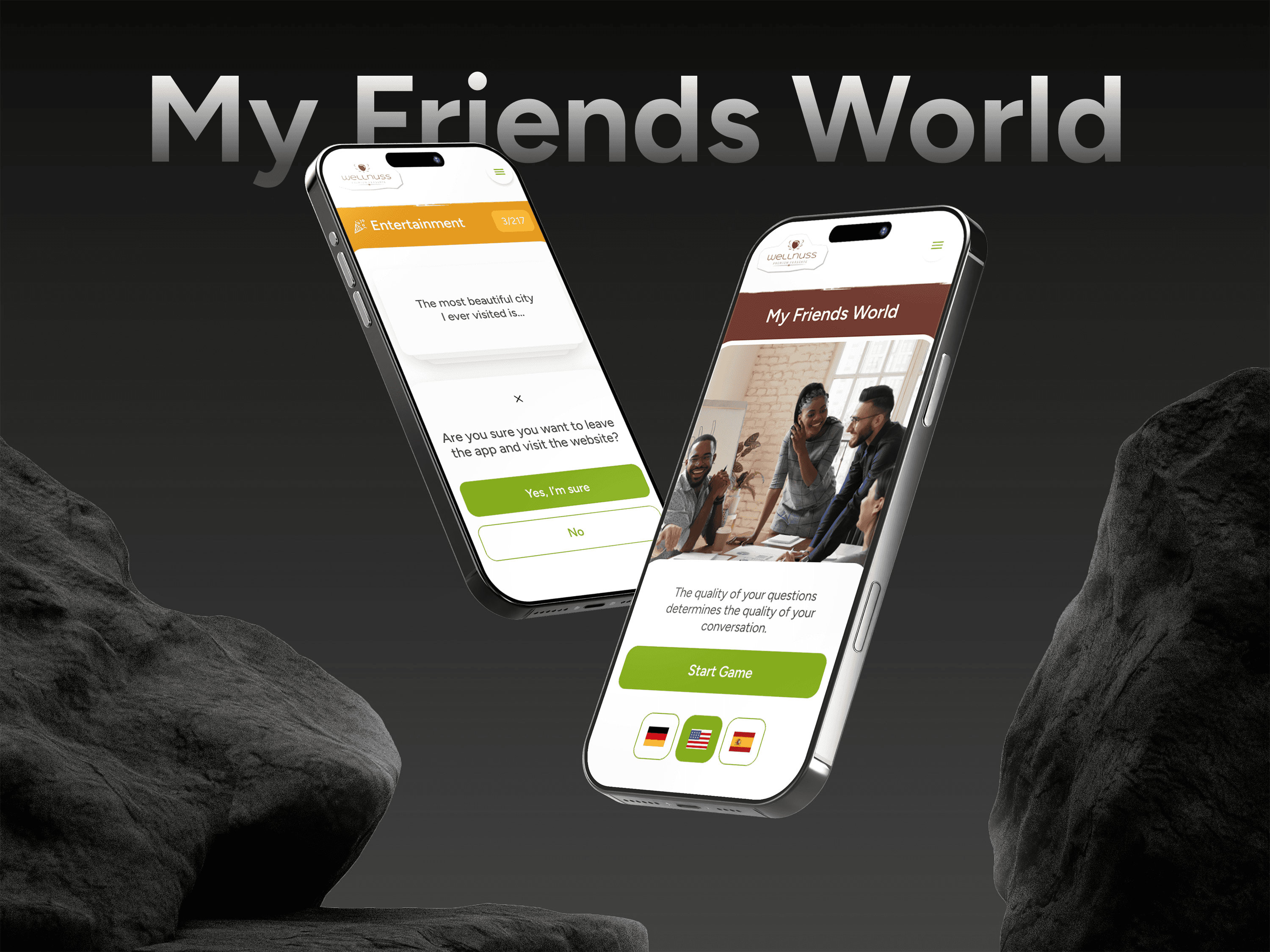
A quiz app in every cookie box, to help a B2B brand sell to everyone
Wellnuss makes premium cookies for companies and their meetings. To start selling to everyone else, they wanted a reason to buy more. We built My Friends World: a quiz app people open from a QR code in the box and play while they eat.
Read the full story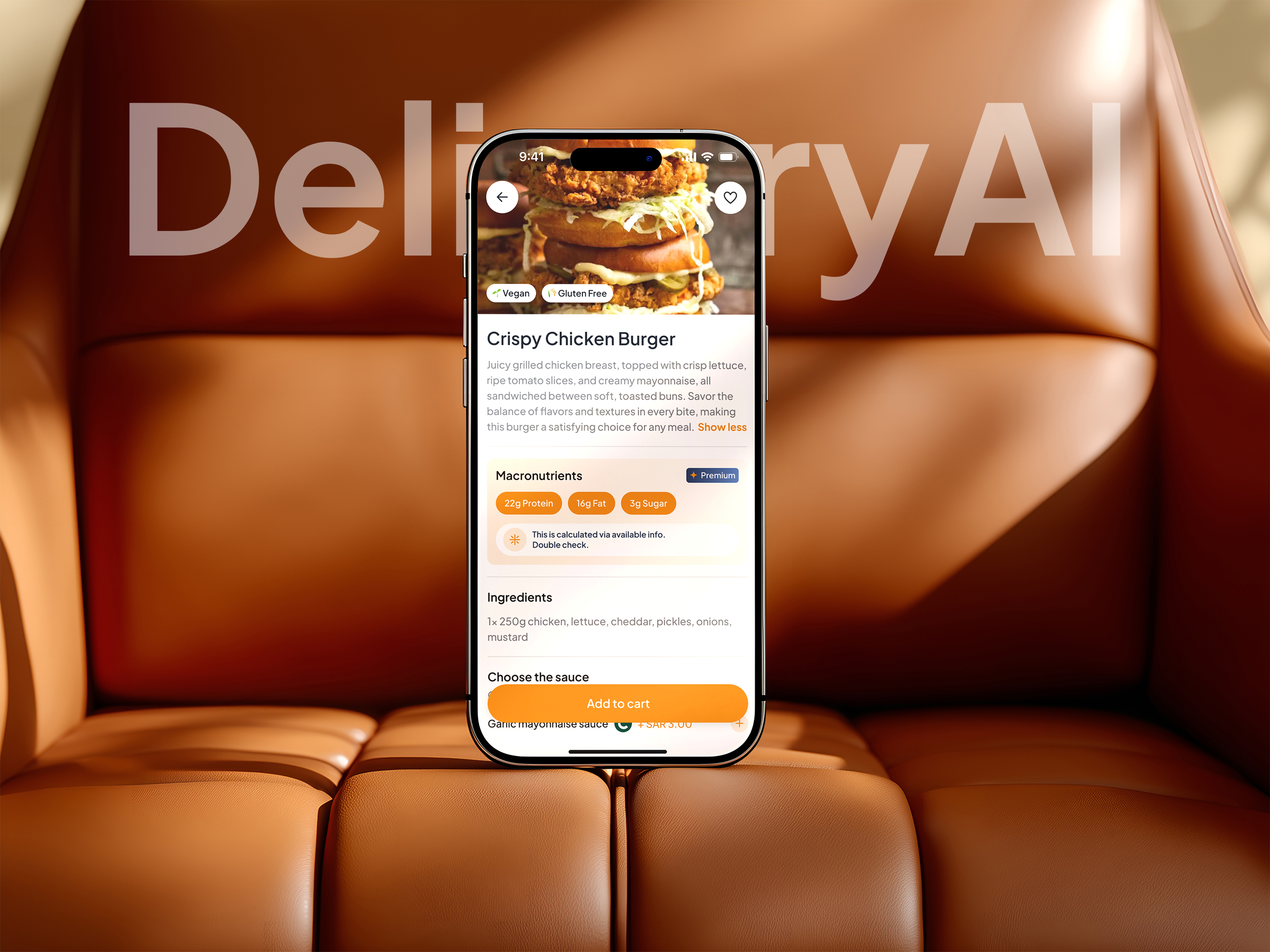
One app to find the cheapest way to order any meal in Saudi Arabia
Mohammed wanted to end the habit of checking seven delivery apps before ordering dinner. We designed and built DeliveryAI: one app that compares prices across platforms, finds the best combination for your basket and fits your diet.
Read the full story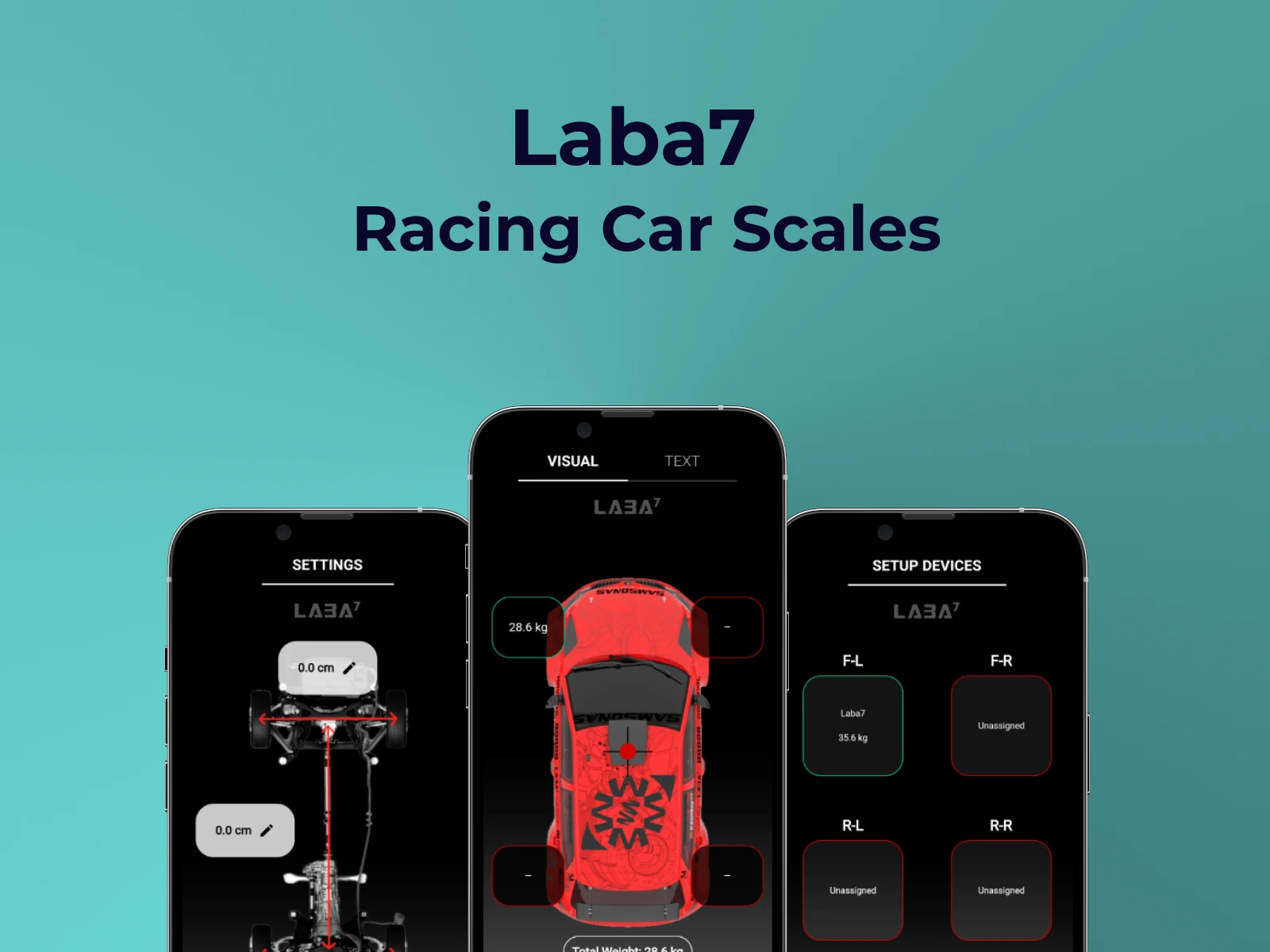
Race-car corner weights, live on your phone
LABA7 builds precision testing equipment for motorsport. Their wireless corner weight scales needed a phone app that connects to every scale and shows the readings in real time. We built it in Flutter, with native Swift and Kotlin where Bluetooth needed it.
Read the full story